
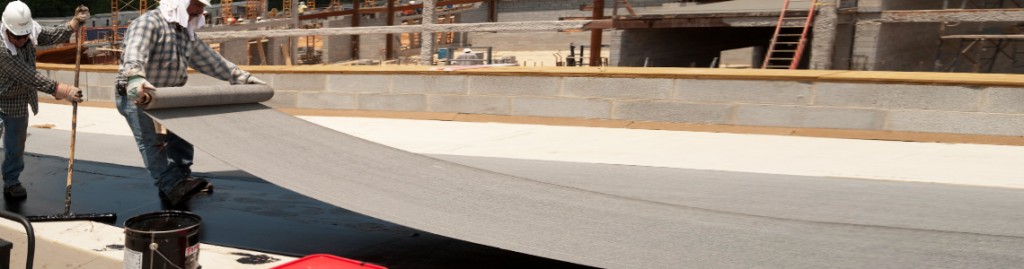
Modified Bitumen roofing systems are asphalt-based designed for buildings with low-slope or “flat” roof structures. Like its name suggest, additives modify the asphalt to enhance the systems performance. Most commonly used agents are either Atactic Polypropylene (APP) or Styrene Butadiene Styrene (SBS). SBS gives the bitumen rubber-like characteristics and improved resistance to aging and weathering. APP modified enhances the bitumen’s performance by increasing its UV resistance, increasing its flexibility at low temperatures, and improving its flow resistance at high temperatures. Modified Bitumen roofing systems provide multiple layers of redundancy and decades of proven performance.
SBS & APP Modified Bitumen Installation Methods
HOT ASPHALT METHOD
Hot installed Modified bitumen systems use the same methods in conventional hot asphalt. This method applies the asphalt directly to a structural concrete roof deck or to an insulated roof deck making it a fully adhered system.
TORCH METHOD
In the Torch Method, we typically start with a thicker membrane on the backside of the roll and add a thin plastic burn-off film. The additional bitumen and burn-off film melt under the application of a propane-fired torch and then adhere the membrane to the substrate. Torch application does not require the use of hot asphalt, eliminating the need for an asphalt kettle. In areas where asphalt fumes are an issue or multiple floors present a safety hazard, using a torch for installation is a valuable option.
COLD-ADHESIVE METHOD
The Cold-Adhesive Method is especially useful where asphalt is inappropriate due to fumes, accessibility restrictions or torch application is restricted. Cold-Adhesive is extremely pragmatic for roof replacements where occupancy comfort is paramount. Roof installers apply the adhesives manually with a squeegee, brush, or spray-applied using properly designed spray equipment. The workmanship is extremely important each method requires the proper amount of adhesive and coverage rates. The results of an over application of adhesive causes an improper bond to form or too much adhesive applied increases membrane displacement.
SELF-ADHESIVE METHOD
‘Peel and stick’ modified bitumen products have been available for more than 20 years. Manufacturers developed a very sticky surface on the back of the modified bitumen roll perfect for steep-slope roofs or in the underlayment for eaves and valleys. The appeal of self-adhering roof membranes is concerns about hot asphalt fumes and solvents in cold adhesives. Self-adhering membranes are perhaps most suitable for hard-to-reach locations eliminating the need to lift asphalt, propane, or adhesives to the roof.