If you manage or own a commercial or industrial building in west-central Florida, Tropical Storm Isaias is worth preparing for this week. Here is how to get ahead of a commercial roof leak before the storm, stay safe during it, and report storm damage quickly after it passes.
Updated Wednesday, October 7, 2026, based on the 5 a.m. ET advisory. Forecasts change. Check the National Hurricane Center for official updates and NWS Tampa Bay for local watches and warnings.
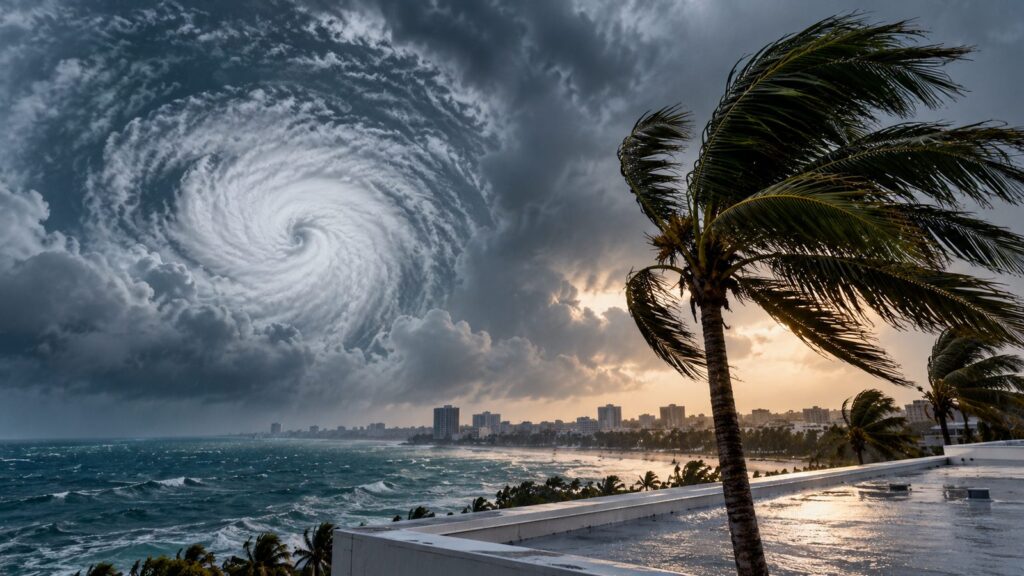
As of the 5 a.m. ET advisory on Wednesday, October 7, Tropical Storm Isaias was in the southern Gulf near 22.0N, 94.1W, with maximum sustained winds of 40 mph, moving east-northeast at 8 mph. Minimum pressure was 1004 mb. The forecast calls for Isaias to strengthen into a hurricane, possibly reaching Category 2 strength on Friday, then make landfall near the Florida Panhandle and Alabama coast Friday night into Saturday before moving inland toward Alabama and Georgia.
Tampa Bay and west-central Florida are not in the forecast landfall area, but we sit on the storm’s wet east side. Expect bands of heavy rain and gusty winds Thursday through Saturday. For commercial and industrial buildings, that combination tests drains, flashings, and rooftop equipment, which is where many storm leaks start. Use the time before the first rain bands to prepare.
Water coming in now? Call our Service department at (877) 726-2661, then send a commercial leak report so we have the details.
Before the storm: a commercial roof checklist
Your maintenance team can handle much of this with safe, authorized roof access. If they cannot get on the roof safely, call us instead.
- Clear drains, scuppers, and gutters. Remove leaves, debris, and anything sitting on drain strainers. When drains back up during heavy rain, water ponds and looks for a way in at seams and flashings. Here is why commercial roof drainage matters more than you think.
- Secure rooftop equipment and loose items. Check RTU access panels, conduit, and any materials or debris left from recent work. Wind can turn loose items into punctures.
- Check RTU curbs, flashings, and penetrations. Look for open seams, cracked sealant, and loose metal at curbs, pipe boots, walls, and roof edges.
- Document roof condition with photos. Take dated wide shots and close-ups of the roof, plus interior ceilings, especially areas that have leaked before. These support warranty and insurance conversations.
- Know your warranty and who to call. Find your roof warranty, the manufacturer, and the warranty number. Save our 24/7 line, (877) 726-2661, and share it with on-site staff and tenants.
- Protect what sits under known trouble spots. Move inventory, electronics, and records away from areas with a history of leaks.
Want a second set of eyes before the rain arrives? Request a pre-storm roof check or drain clearing and our Service team will follow up. Availability can be limited right before a storm, so call (877) 726-2661 if timing is tight.
During the storm: safety first
- Never go on the roof during the storm. Wind, lightning, and wet surfaces make roofs dangerous. Leave roof access to trained crews.
- Protect contents. Cover equipment and inventory with plastic sheeting and move what you can.
- Catch and contain water. Use buckets, wet vacs, and absorbent material. If water is near electrical equipment or light fixtures, keep people away and follow your facility’s safety procedures.
- Note the location and time. Write down where water is coming in (floor, suite, column line, or nearest landmark), when it started, and how heavy it is. Take photos and short videos from inside.
- Call if water is active. If water is entering or spreading, call (877) 726-2661. Our emergency line is available 24/7.
- Tenants: tell your property manager or building owner right away, so the leak can be reported under the roof warranty.
After the storm: document, report, inspect
- Document what you see. Photograph ceilings, walls, floors, and damaged contents. From the ground, photograph visible damage such as displaced roof edge metal or debris on the roof.
- Report leaks fast. Call (877) 726-2661 for active water, then submit a commercial roof leak report with the location, photos, and access details. The form gives our Service department the details; it does not dispatch a crew by itself, so call when water is active.
- Notify your roof manufacturer if the roof is under warranty. Our guide on how to report a roof leak, including manufacturer warranty contacts walks you through it: notify the manufacturer, let RAMCON know you reported it, and name RAMCON as your preferred roofing contractor.
- Schedule a post-storm inspection. Even without an active leak, wind and rain can loosen flashings and open seams that leak in the next storm. A commercial roof inspection documents current condition with photos and recommendations.
Why fast reporting matters for your roof warranty
Most commercial roof warranties are issued by the roofing manufacturer, and many include notice requirements that spell out how and when a leak must be reported. Check your warranty document for the exact terms.
Reporting quickly helps keep your warranty in good standing, limits interior damage (a small leak left alone can wet insulation and spread), and gets your leak on record before calls build up after a storm.
For a warranted roof, take both steps: notify the manufacturer and report the leak to RAMCON.
Why Florida facility teams call RAMCON
- Commercial focus. We work on commercial, industrial, and institutional roofs, and our Service department handles leak response, repairs, inspections, and maintenance.
- Local service teams. RAMCON is headquartered in Tampa, with Tampa and Orlando branches serving properties across Florida.
- Warranty-aware leak response. We work with roofing manufacturers on warranty leak repairs and can help you follow your manufacturer’s reporting steps.
- Around-the-clock line. Our 24/7 emergency response line is (877) 726-2661.
- Care between storms. Roof Shield proactive maintenance programs keep drains, flashings, and seams on a schedule, so the next storm finds fewer weak spots.
Commercial roof leak and storm FAQ
Who do I call for a commercial roof leak during a storm in Tampa?
Call RAMCON’s 24/7 line at (877) 726-2661. If water is actively entering or spreading, call first, then submit a commercial roof leak report with the location, photos, and access details. RAMCON serves commercial and industrial properties in Tampa Bay, Orlando, and across Florida.
Should I go on the roof to find a leak during a storm?
No. Wind, lightning, and wet surfaces make roofs dangerous during a storm. Stay inside, contain the water, note where and when it started, and call (877) 726-2661. Leave roof access to trained crews once conditions are safe.
Do I need to notify my roof manufacturer about a storm leak?
If your roof is covered by a manufacturer warranty, check the warranty for its notice requirements and report the leak to the manufacturer. Also report it to RAMCON and name RAMCON as your preferred roofing contractor. Our how to report a roof leak guide lists manufacturer warranty contacts.
Can a commercial roof leak be permanently repaired while it is raining?
Permanent repairs usually need a dry roof. When water must be stopped before conditions improve, a temporary repair may be possible once it is safe to access the roof, followed by a permanent repair in dry weather.
How can I prepare my commercial roof for Tropical Storm Isaias?
Clear drains, scuppers, and gutters; secure rooftop equipment and loose items; check RTU curbs, flashings, and penetrations; photograph the roof and interior ceilings; and locate your warranty. You can request a pre-storm roof check from RAMCON or call (877) 726-2661.
Need help with a commercial roof leak?
If water is actively entering or spreading, call (877) 726-2661 now. Then send a leak report so our Service department has the details. For pre-storm checks, drain clearing, or post-storm inspections, request service online or contact our team.